
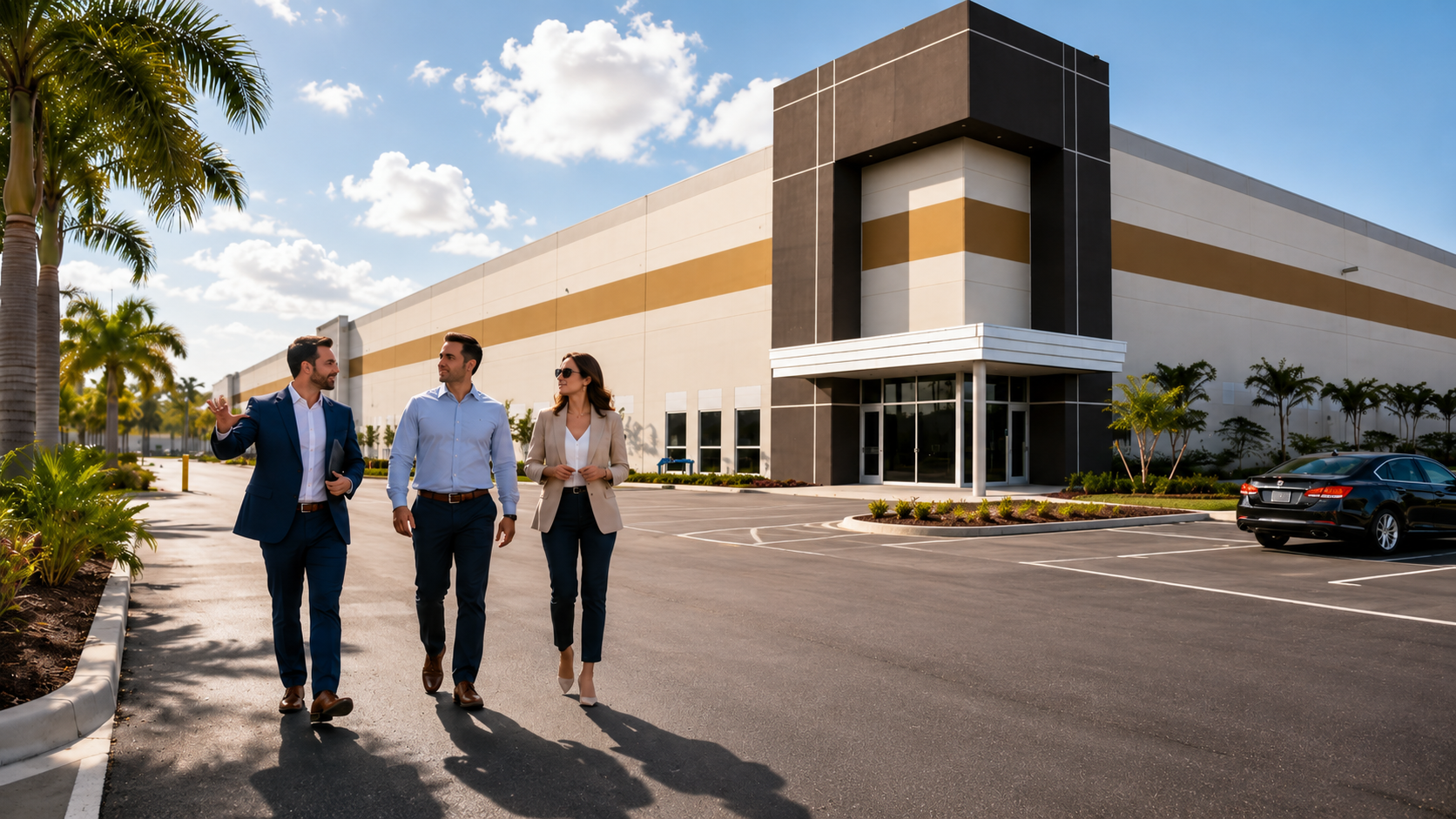
Finding the right commercial space is one of the most important decisions a business can make. The right property can improve operations, make it easier to serve customers, support future growth, and help attract employees. The wrong space can create logistical challenges and unnecessary expenses for years.
For businesses searching for commercial space for lease in South Florida, the decision involves much more than comparing rental rates and square footage. Location, accessibility, property type, parking, warehouse capabilities, lease terms, and the quality of property management can all have a significant impact on your business.
Whether you’re searching for office, warehouse, industrial, or flex space in Broward County or elsewhere in South Florida, here are the most important factors to consider before signing a commercial lease.
What Should You Look for When Leasing Commercial Space?
When leasing commercial property, businesses should evaluate the property’s location, permitted use, size, layout, accessibility, parking, loading capabilities, lease structure, operating expenses, property condition, management, and ability to accommodate future growth.
In South Florida, businesses should also consider factors such as hurricane preparedness, drainage, transportation access, and proximity to major highways, airports, ports, customers, and employees.
Let’s look at each of these considerations in more detail.
1. Choose a Location That Supports Your Business
You’ve probably heard that the three most important factors in real estate are “location, location, location.” Commercial real estate is no exception.
However, the best location isn’t necessarily the property with the most visibility. It is the location that best supports how your business actually operates.
Consider questions such as:
- Where are your customers located?
- Where do your employees live?
- Do employees or customers need convenient highway access?
- Do you receive frequent deliveries?
- Do trucks need to enter and exit the property?
- Do you serve customers throughout Broward, Miami-Dade, or Palm Beach counties?
- How important is proximity to airports or ports?
For many businesses, Broward County commercial real estate provides an attractive central location within the South Florida market. Access to major transportation corridors can make it easier to reach customers, employees, vendors, and neighboring markets.
2. Make Sure the Property Is Suitable for Your Business Use
Before becoming attached to a particular property, determine whether your intended business operations are permitted at that location.
Commercial properties can have different zoning designations and permitted uses. An attractive warehouse doesn’t necessarily mean every industrial, automotive, retail, manufacturing, or service business can operate there.
Businesses should investigate their intended use early in the leasing process and determine whether additional municipal approvals, licenses, permits, or certificates may be necessary.
This is particularly important if your business involves manufacturing, outdoor storage, significant customer traffic, specialized equipment, vehicle storage, or other activities that may be subject to additional requirements.
3. Select the Right Type of Commercial Space
Not every business needs a traditional office or warehouse.
South Florida businesses can choose among several types of commercial properties, including:
Office space is generally best suited for professional services, administrative teams, and businesses that primarily need employee workspaces and meeting areas.
Warehouse and industrial space can accommodate inventory, distribution, equipment, contractors, manufacturing, and other operational needs.
Flex space combines elements of office and warehouse space, making it particularly useful for companies that need both a professional customer-facing environment and operational space.
For example, a contractor might need offices for administrative staff, a professional entrance for customers, and warehouse space for equipment and materials. A flex property can provide all three within the same facility.
Understanding how your business will actually use the property can help narrow your search considerably.
4. Look Beyond the Advertised Square Footage
Two commercial spaces with the same square footage can function very differently.
Instead of focusing exclusively on the total number of square feet, evaluate how efficiently the space is configured.
Consider:
- Office-to-warehouse ratio
- Ceiling or clear height
- Column placement
- Storage configuration
- Conference and meeting areas
- Restrooms
- Reception areas
- Loading areas
- Drive-in or overhead doors
- Customer-facing areas
A well-designed 5,000-square-foot space could be considerably more useful to your business than a poorly configured 7,000-square-foot property.
Think in terms of usable space, not simply total space.
5. Evaluate Parking and Vehicle Access
Parking is easy to overlook during a property tour, but it can quickly become a major operational issue.
Determine how many parking spaces your employees and customers will realistically require during your busiest periods.
Industrial and warehouse users should look beyond traditional parking spaces and consider vehicle circulation throughout the property.
Ask whether delivery vehicles can easily reach your space. If your operation uses vans, trailers, box trucks, or larger commercial vehicles, evaluate turning areas, entrances, loading zones, and access points.
The way vehicles move through a commercial property can be just as important as what happens inside the building.
6. Consider Warehouse and Loading Features
Businesses searching for warehouse or industrial space for lease in South Florida should carefully evaluate the property’s operational features.
Depending on your business, important considerations may include:
- Ceiling height
- Overhead doors
- Dock-high or grade-level loading
- Electrical capacity
- Warehouse lighting
- Loading and unloading areas
- Truck access
- Storage configuration
- Office build-out
- Security
- Climate control
Don’t simply ask whether a property has warehouse space. Determine whether that warehouse is configured for the way your company operates today and how it may operate several years from now.
7. Understand the Full Cost of the Lease
The advertised rental rate does not always represent the total cost of occupying commercial space.
Before signing a lease, understand exactly what expenses are your responsibility.
Depending on the lease structure, additional expenses could include common area maintenance, property taxes, insurance, utilities, maintenance, repairs, and other operating expenses.
Businesses should ask for a clear explanation of:
Base rent: The primary rental amount for the space.
Operating expenses: Costs associated with maintaining and operating the property.
Annual increases: How and when rent may increase.
Security deposit: The amount required before occupancy.
Tenant improvements: Which party is responsible for modifications or improvements to the space.
Maintenance responsibilities: What the landlord maintains versus what the tenant must maintain.
Reviewing these expenses helps you compare properties based on the true occupancy cost, rather than simply comparing advertised rental rates.
8. Evaluate the Property’s Condition and Management
The quality of the landlord or property management team can have a significant impact on your experience after moving in.
Look around the entire property when touring—not just the available unit.
Are common areas clean?
Does the landscaping appear maintained?
Is the parking lot in good condition?
Does the property appear secure?
Are building exteriors professionally maintained?
These details can indicate how a property is managed over the long term.
A professionally maintained commercial property can also help businesses create a stronger impression on customers, employees, vendors, and business partners.
9. Consider South Florida’s Climate and Severe Weather
Commercial properties in South Florida face environmental conditions that businesses in many other markets don’t encounter.
Heavy rain, extreme heat, tropical storms, and hurricanes should all be considered when evaluating a property.
Businesses may want to ask about:
- Storm preparation procedures
- Drainage
- Roof maintenance
- Flood considerations
- Backup power options
- Building access following a storm
- Emergency communication procedures
- Hurricane protection features
Businesses storing valuable inventory, equipment, or records should pay particular attention to these considerations.
A property’s ability to withstand and recover from severe weather can directly affect business continuity.
10. Think About Security
Security requirements vary significantly depending on the business.
An office-based company may primarily be concerned with building access, lighting, and employee safety. A warehouse storing valuable inventory or equipment may require additional security considerations.
When touring commercial properties, evaluate features such as exterior lighting, property access, fencing or gates where applicable, security systems, visibility, and after-hours access.
You should also consider how employees will enter and leave the property during early morning or evening hours.
11. Make Sure the Space Can Accommodate Growth
Don’t choose commercial space based exclusively on what your company needs today.
Consider where your business could be two, three, or five years from now.
Will you need additional employees?
Could inventory increase?
Will you add vehicles or equipment?
Could you need more office space?
Are there opportunities to expand within the property or business park?
Leasing substantially more space than you need can create unnecessary overhead. But choosing a property your company will quickly outgrow can result in another expensive relocation.
The goal is to find a space that balances current efficiency with reasonable room for growth.
12. Carefully Review the Commercial Lease
A commercial lease is a significant financial and legal commitment.
Before signing, make sure you understand the lease term, renewal options, rent increases, operating expenses, maintenance obligations, insurance requirements, permitted uses, signage rights, assignment and subleasing provisions, and any other conditions affecting your occupancy.
Businesses should consider having an experienced commercial real estate professional and qualified attorney review the lease before making a final commitment.
Frequently Asked Questions About Leasing Commercial Space in South Florida
What should I look for when leasing commercial space in South Florida?
Businesses should consider location, zoning and permitted use, property type, usable square footage, parking, loading access, lease costs, property condition, management, security, hurricane preparedness, and opportunities for future growth.
What is flex commercial space?
Flex space typically combines office and warehouse or industrial areas within one commercial property. It can be ideal for contractors, service companies, distributors, light industrial businesses, and other companies that require both administrative and operational space.
Is Broward County a good location for a business?
Broward County’s central position within the South Florida metropolitan area can provide businesses with convenient access to Miami-Dade and Palm Beach counties, along with major highways, airports, ports, customers, and a large regional workforce. The right location ultimately depends on the company’s customers, employees, suppliers, and operational requirements.
How much commercial space does my business need?
Calculate space requirements based on employees, inventory, equipment, offices, customer areas, parking, loading requirements, and expected growth. Businesses should focus on the functionality of the floor plan in addition to total square footage.
What is the difference between warehouse and flex space?
Warehouse space is generally focused primarily on storage, distribution, manufacturing, or other operational activities. Flex space typically includes a greater combination of warehouse and finished office or customer-facing areas.
What additional costs should I expect when leasing commercial property?
Depending on the lease, tenants may be responsible for expenses beyond base rent, including common area maintenance, taxes, insurance, utilities, repairs, and other operating expenses. Always request a detailed explanation of the lease structure and estimated total occupancy costs.
Should I have an attorney review a commercial lease?
Because commercial leases can create substantial long-term financial obligations, businesses should consider having a qualified attorney review the agreement and explain their rights and responsibilities before signing.
Find Commercial Space for Your Business in South Florida
Choosing commercial space isn’t simply about finding an available building. It’s about finding a property that supports the way your business operates today while providing the flexibility to succeed tomorrow.
Location, accessibility, layout, parking, warehouse capabilities, property management, lease terms, and future growth should all factor into the decision.
Glades Asset & Property Management owns and manages commercial and industrial properties in Broward County and South Florida, including spaces designed to serve the needs of growing businesses.
If you’re searching for commercial, warehouse, industrial, or flex space for lease in Broward County, explore our available properties and discover a location that can support the next stage of your business.